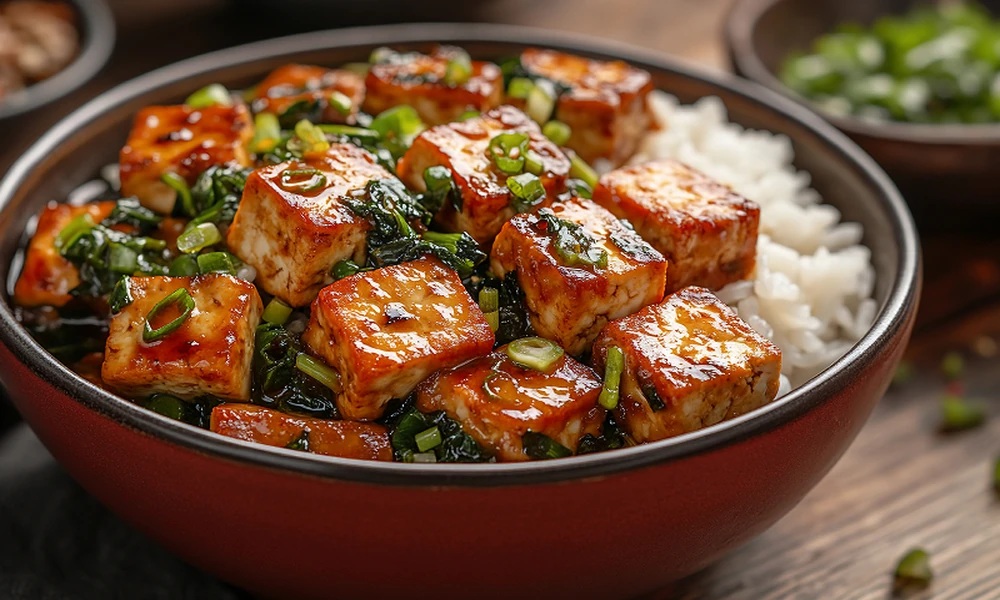
Mapo tofu was never invented to impress anyone. The story goes that a pockmarked woman running a small roadside eatery in Chengdu threw together tofu, minced meat, and whatever fiery, numbing spices were on hand, cooking for hungry labourers who wanted something hot, cheap, and filling. It’s a dish built entirely around comfort, not ceremony. Watching it earn Michelin recognition in Singapore, then, is a slightly strange thing to witness, a home-style dish suddenly standing in a spotlight it was never really designed for.
The dish hasn’t changed its ambitions just because the recognition arrived. It’s still trying to do exactly what it was always trying to do, feed someone properly and send them home satisfied.
Why This Dish Was Never Supposed to Be a Special-Occasion Order
Mapo tofu belongs to a category of Sichuan cooking built for everyday eating, not celebration menus. It’s silky tofu, ground meat, chilli bean paste, and Sichuan peppercorn, ingredients any household kitchen could reasonably stock, cooked quickly enough to get dinner on the table without ceremony. That everyday, unpretentious quality is really the whole point of the dish; the numbing heat and savoury depth were built for repetition, for a bowl someone might genuinely want on a Tuesday night, not just once for a special occasion.
There’s something almost contrary about dressing up a dish like this. Whatever makes it worth returning to has very little to do with how special the occasion around it happens to be.
What Actually Makes a Version of This Dish Genuinely Stand Out
Getting mapo tofu right isn’t about reinventing it into something unrecognisable; it’s about respecting the balance the dish was built around, real numbing heat, genuine depth of flavour, silky rather than falling-apart tofu, without losing the comfort that made it worth eating in the first place. Among discussions of best mapo tofu in Singapore, the versions that stand out tend to be the ones that still feel unmistakably like the dish it’s descended from, rather than a diluted, overly polished interpretation of it.
Why a Family Setting Is Exactly Where This Dish Belongs
A dish built around shared, everyday eating makes considerably more sense set down in the middle of a table than plated individually and eaten in silence. Mapo tofu, spooned generously over rice, invites the same kind of casual, communal eating it would have seen in its original Chengdu setting, someone reaching across for more, a bowl passed around, conversation continuing over it rather than pausing for it.
Why This Kind of Comfort Food Suits a Family Table Specifically
Dishes built for sharing tend to work best in settings designed around exactly that kind of eating, rather than a formal, plated dining format that pulls attention away from the table itself. A genuine Chinese family restaurant leans into this naturally, building a menu and a setting around dishes meant to be passed, shared, and returned to, rather than treated as individual courses eaten in isolation.
Why the Michelin Recognition Doesn’t Change What the Dish Actually Is
A Bib Gourmand nod celebrates good food at an accessible price, not fine dining reinvention, which is really the right kind of recognition for a dish like this. Mapo tofu earning that acknowledgement doesn’t turn it into something else entirely; it simply confirms that doing an everyday dish properly, with genuine care and the right technique, is its own kind of achievement, distinct from chasing novelty or reinvention for its own sake.
If anything, the recognition is really a vote for restraint, for getting a familiar, humble dish right rather than reinventing it into something it was never meant to be.
A dish built for a hungry labourer in Chengdu and a dish earning Michelin recognition in Singapore turn out to be closer than they first appear; both are simply mapo tofu done properly. The bowl was never trying to be fancy. It was just trying to be exactly what it’s always been, and doing that well turns out to be worth quite a lot.
That’s really the whole appeal: a dish that never needed reinventing, just someone willing to do the original justice.
Ready to taste a bowl that’s stayed true to where it came from? Visit Chen’s and find the nearest outlet to try it for yourself.